
 I have loved mushrooms since childhood, and I have also been a programmer for a long time. Combining these two hobbies, I wrote this website. Previously, I had two other mushroom identification sites, which I sold. Only one of them remains accessible today. My goal with the current site is to create an easy-to-use search and identification platform that works great both in the field and at home. I hope it brings joy to others.
Bartha László
Species flashcards
Practice area: created for the 303-species Hungarian mushroom inspector requirement. It is not an official examination; requirements in other countries may differ.

White-stemmed bolete
Leccinum albostipitatum
edible
- Habitat: deciduous
- Fruiting season: June – September
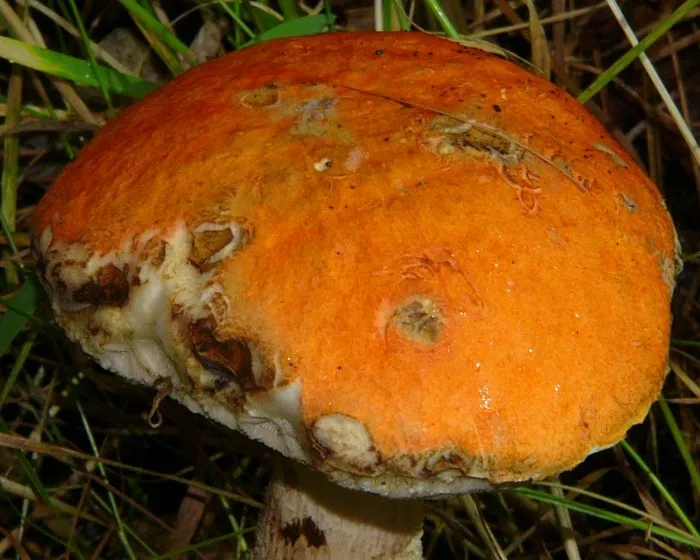
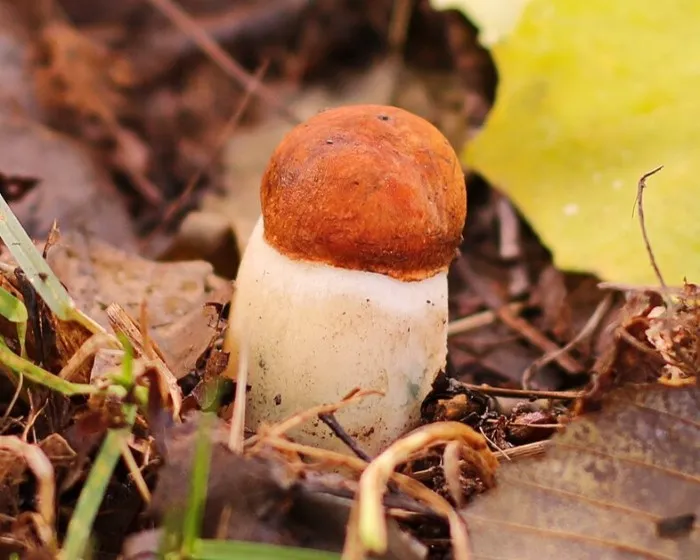
- Cap: sphere convex ragged smooth
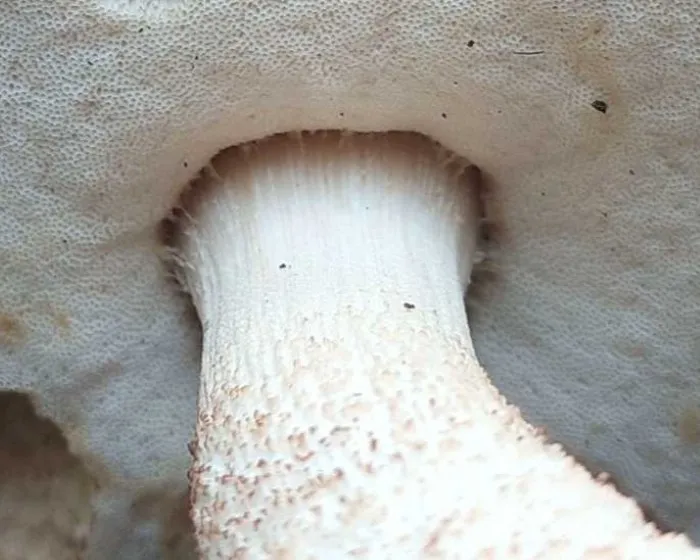
- Stem: cylindrical long thickening scaly
- Fertile layer: thick curved narrow
Description
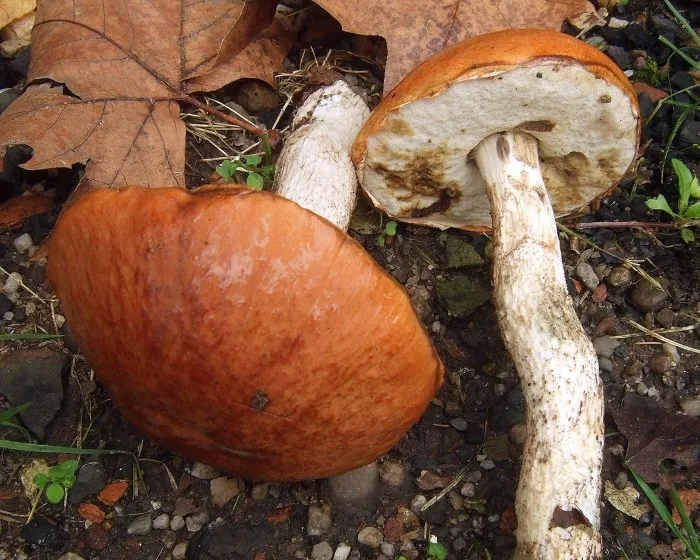
Cap: 5–15(20) cm across, spherical when young, later convex. Its fleshy margin often projects beyond the tube layer and can appear ragged. Surface smooth, sometimes slightly cracked in age; orange-red, brick-red or brownish-red.
Tubes and pores: The tube layer is thick and curves upward before the stem. Pores narrow, cream-coloured at first, becoming brownish-grey in age; they may brown when bruised.
Stem: 10–20 cm tall and 2–4 cm thick, slender, cylindrical and evenly thickening towards the base. White, with pure white scales when young, later reddish-brown to blackish-brown scales; a blue-green tint may occur near the base.
Flesh: Firm and white. When cut, it first turns greyish-pink, then greyish-black to black; a blue-green tint may also occur at the stem base. Smell and taste indistinct.
Spores: Spore print dark olive-brown to ochre-brown. Spores 13–18 × 4–5.5 µm, ellipsoid to fusiform, smooth and thin-walled.
Occurrence: An obligate mycorrhizal species with poplars, occurring on soil in open poplar woodland and beneath poplars from summer to early autumn. It is especially associated with aspen.
Edibility: Edible, but only after thorough cooking. The stems of older specimens can be fibrous and tough.
Lookalikes: It resembles other orange-capped scaber-stalks. Association with poplars, white stem scales when young, and flesh turning pinkish then black are important identifying characters.
Note: Leccinum derives from Tuscan and northern Italian leccino, itself from leccio, a folk name for holm oak. Albostipitatum combines albus (“white”) and stipes (“stem”), referring to the pure white stem scales of young fruiting bodies.
Species description: Hendrik den Bakker and Machiel Noordeloos scientifically described the species in 2005.
Taxonomy
- PhylumBasidiomycota
- ClassAgaricomycetes
- OrderBoletales
- FamilyBoletaceae
- GenusLeccinum
- Species: Leccinum albostipitatum
- Authority: den Bakker & Noordel. (2005)
- English name: White-stemmed bolete
- Ecological status: mycorrhizal
- Edibility: edible
