
 I have loved mushrooms since childhood, and I have also been a programmer for a long time. Combining these two hobbies, I wrote this website. Previously, I had two other mushroom identification sites, which I sold. Only one of them remains accessible today. My goal with the current site is to create an easy-to-use search and identification platform that works great both in the field and at home. I hope it brings joy to others.
Bartha László
Species flashcards
Practice area: created for the 303-species Hungarian mushroom inspector requirement. It is not an official examination; requirements in other countries may differ.
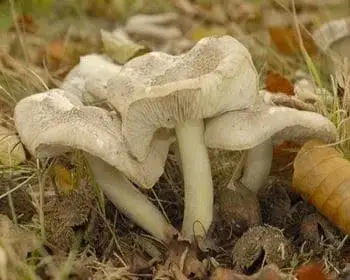
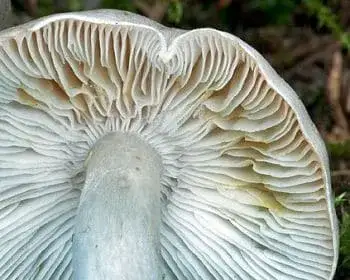
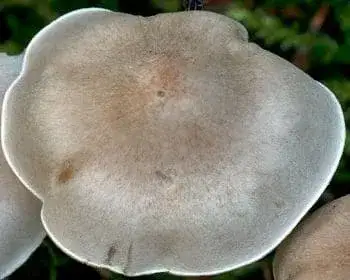
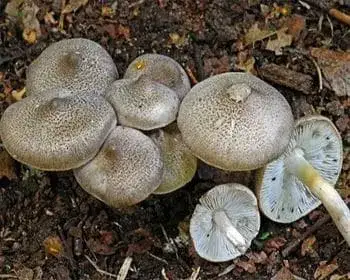
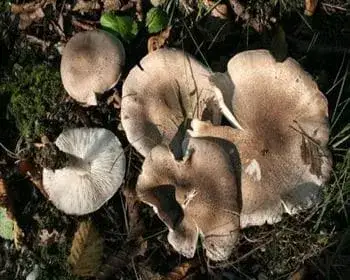
Silvery Tricholoma
Tricholoma argyraceum
edible
- Habitat: deciduous
- Fruiting season: May – November
- Cap: flat conical scaly smooth
- Stem: cylindrical tapering
- Fertile layer: adnate tooth dense smooth
Description
Cap: Its cap grows only to 6-8 cm wide. Initially conical, but then flattens more and more, with a small, blunt umbo always remaining in the center. Its color is silvery-grayish-brown, turning lemon yellow over time. Its spotted surface is covered with radial fibers or fine scales.
Gills: Its white gills are densely standing, turning yellow in older mushrooms. They are curved-adnate to the stem, and when young, the gills are covered with a cobweb-like veil, which disappears without a trace over time.
Stem: The almost white stem is only 6-8 cm tall, its surface is silky fibrous.
Flesh: White and weakly floury-smelling.
Spore: White; 5-6 x 3-3.5 µm; elliptical, smooth.
Occurrence: Common species in Hungary. Found in acidic and slightly acidic hornbeam-oak forests, sandy poplar forests, mixed forests from May to November.
Edibility: Edible mushroom species.
Confusion: The edible grey tricholoma is quite similar, but it is found only under two-needle pines and its gills are also gray. It can be confused with the black-edged parasol growing on calcareous soil, but that is not dangerous either.
Note: Its mild floury smell stands out, but this is true for several mushroom species. Therefore, it cannot be used as a sole identifying feature. It is better to pay attention to the yellowing. There are about 18 similar, gray or grayish-brown, fibrous-scaly parasol species. Some of them are poisonous, such as the tiger tricholoma. scalpturatum means felted, scaly cap surface.
Species description: In 1779, the French mycologist Pierre Bulliard described this species as Agaricus argyraceus. His compatriot Claude Casimir Gillet gave it its current name in 1874.
Taxonomy
- PhylumBasidiomycota
- ClassAgaricomycetes
- OrderAgaricales
- FamilyTricholomataceae
- GenusTricholoma
- Species: argyraceum
- Described by: (Bull.) P. Kumm.
- Hungarian name: sárguló pereszke
- Lifestyle: mycorrhizal
- Edibility: edible
