
 I have loved mushrooms since childhood, and I have also been a programmer for a long time. Combining these two hobbies, I wrote this website. Previously, I had two other mushroom identification sites, which I sold. Only one of them remains accessible today. My goal with the current site is to create an easy-to-use search and identification platform that works great both in the field and at home. I hope it brings joy to others.
Bartha László
Species flashcards
Practice area: created for the 303-species Hungarian mushroom inspector requirement. It is not an official examination; requirements in other countries may differ.
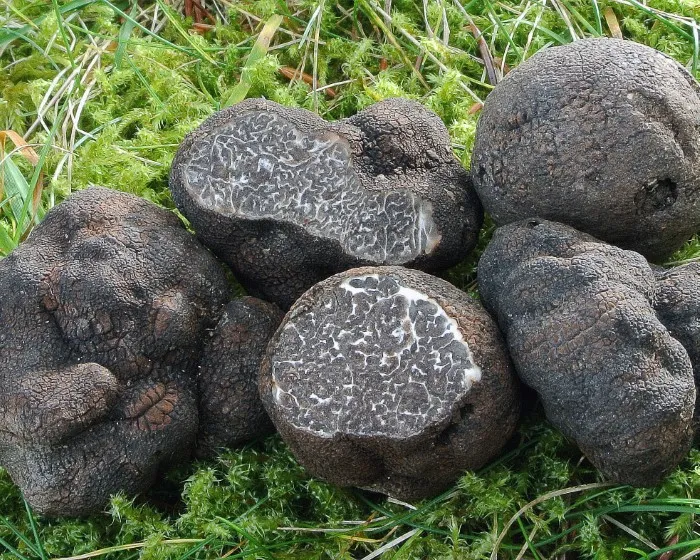
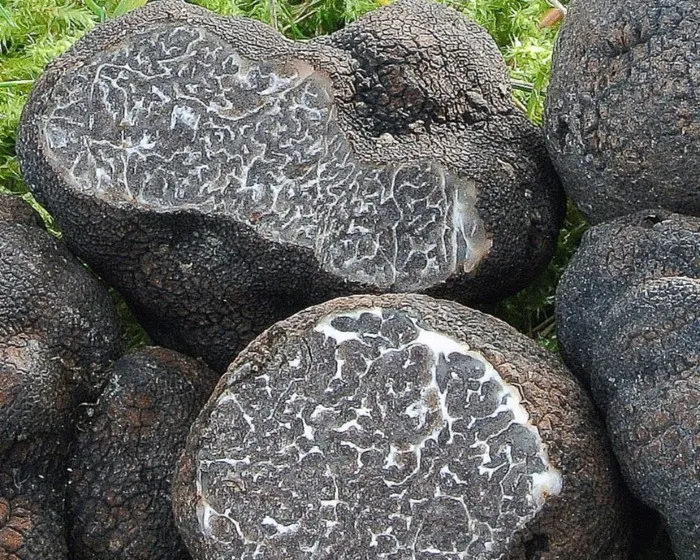
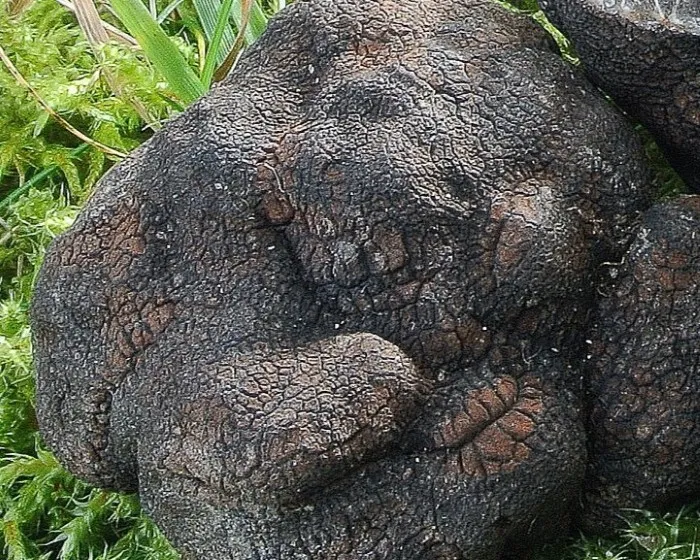
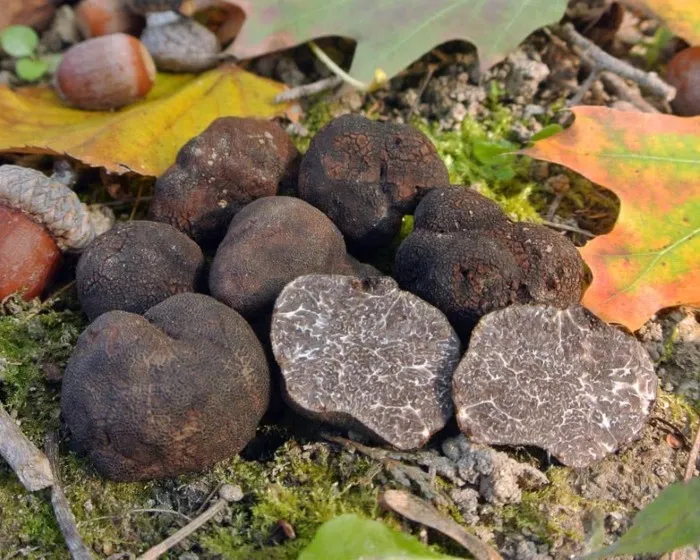
Large-spored truffle
Tuber macrosporum
edible
- Habitat: deciduous coniferous
- Fruiting season: September – December
- Cap: globular depressed bumpy
- Stem: none
- Fertile layer: veined
Description
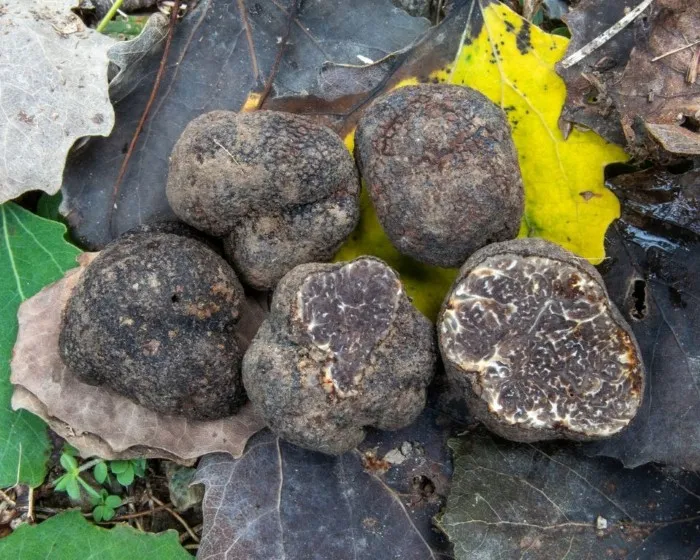
Fruiting body: Usually 1–5 cm across, developing underground, globular to irregularly tuberous. The surface is blackish, dark brown, reddish-brown or rusty, covered with small flattened polygonal warts, and may therefore appear almost smooth.
Fertile layer: Located inside the fruiting body. The gleba is whitish-brown at first, later grey-brown to purple-brown, marbled with numerous broad, white, winding and branching veins.
Stem: No stem is present.
Flesh: Fleshy, firm but brittle. The smell is strongly garlic-like when young and later onion-like; the flavour is pleasantly strong and aromatic.
Spores: The spore mass is yellow-brown, becoming reddish-brown at maturity. Spores are elliptical and very large, 42–85 × 30–42 µm, with an irregular fine reticulate-alveolate ornamentation; the mesh is 3–5 µm high.
Occurrence: Fruits from September to December, chiefly on calcareous clay or silty-clay soils. A mycorrhizal species associated with oak, hornbeam, poplar, willow and hazel.
Edibility: An excellent edible mushroom. Its strong garlic aroma makes it particularly valued fresh or as a seasoning for truffle dishes.
Lookalikes: It may resemble summer truffle, winter truffle and Istrian truffle. Flattened warts, a strong garlic scent and exceptionally large spores aid identification.
Note: Tuber derives from the Latin tumere, meaning to swell. Macrosporum combines Greek words for large and spore, referring to the conspicuously large spores of this species.
Species description: Scientifically described by Carlo Vittadini in 1831.
Taxonomy
- PhylumAscomycota
- ClassPezizomycetes
- OrderPezizales
- FamilyTuberaceae
- GenusTuber
- Species: Tuber macrosporum
- Authority: Vittadini (1831)
- English name: Large-spored truffle
- Ecological status: mycorrhizal
- Edibility: edible
