
 I have loved mushrooms since childhood, and I have also been a programmer for a long time. Combining these two hobbies, I wrote this website. Previously, I had two other mushroom identification sites, which I sold. Only one of them remains accessible today. My goal with the current site is to create an easy-to-use search and identification platform that works great both in the field and at home. I hope it brings joy to others.
Bartha László
Species flashcards
Practice area: created for the 303-species Hungarian mushroom inspector requirement. It is not an official examination; requirements in other countries may differ.
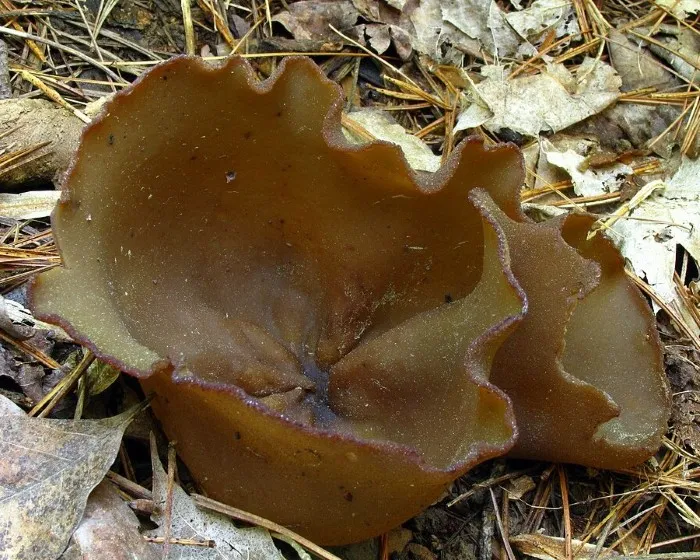
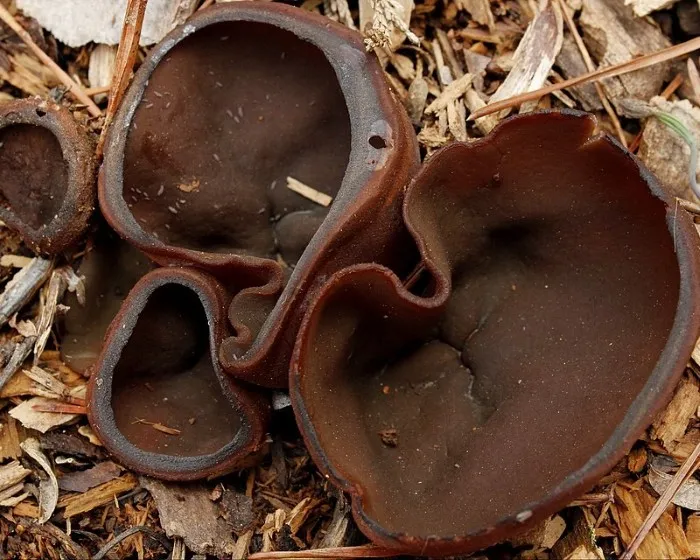
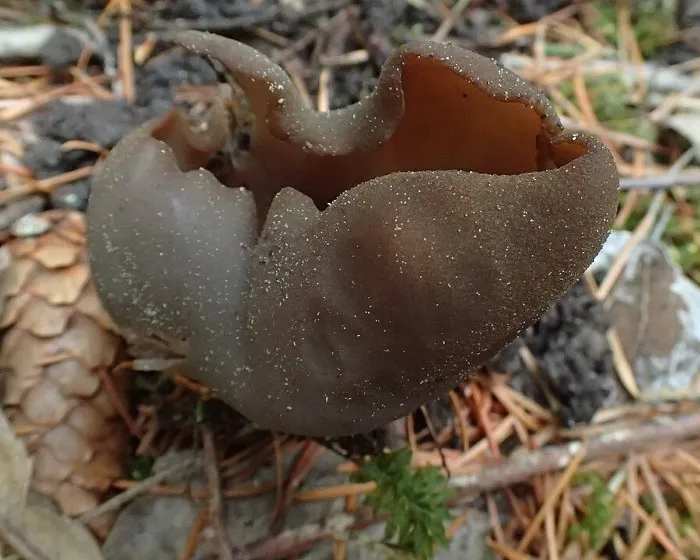
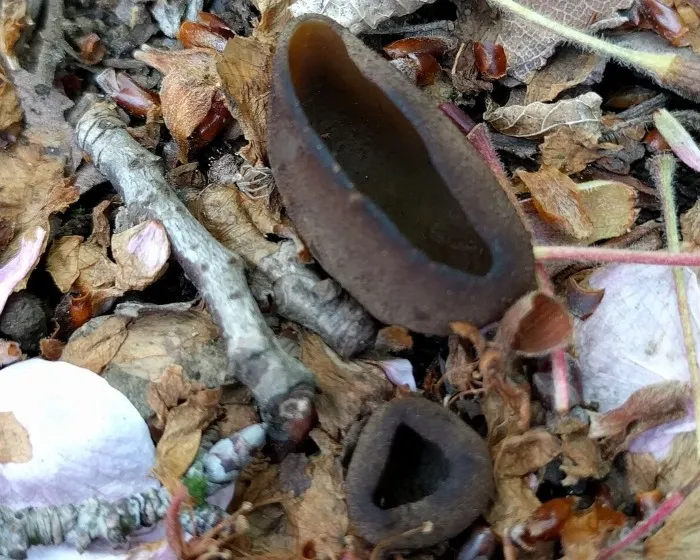
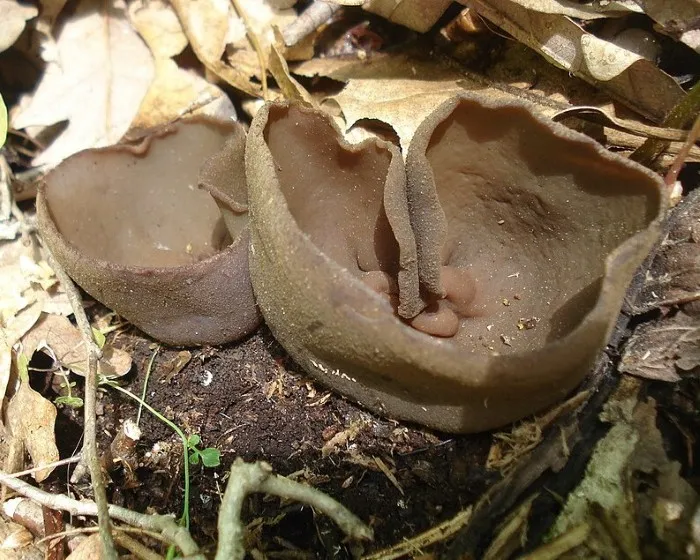
Common brown cup
Phylloscypha phyllogena
not edible
- Habitat: deciduous
- Fruiting season: May – July
- Cap: cup spreading wavy
- Stem: cylindrical
- Fertile layer: smooth
Description
Fruitbody: Cup-shaped when young, 2–10 cm across, spreading with age. The inner surface is dark purplish-brown, reddish-brown or olive-brown, especially towards the centre. The outer surface is finely granular and reddish-brownish-violet, often bluish at the basal attachment; the margin is thin, wavy and may turn black on drying.
Fertile layer: Found on the inner, smooth, dark purplish-brown, reddish-brown or olive-brown surface of the fruitbody.
Stem: There is no distinct stem; the fruitbody attaches to the substrate at a narrow central point.
Flesh: Thin, brittle and brownish. Smell and taste not distinctive.
Spores: Spore print whitish; spores 16–21 × 8–10 µm, elliptical, transparent, isolatedly warted and often containing two oil droplets.
Occurrence: A saprotrophic species growing singly or in small groups on decaying broadleaf wood, leaf litter or lignin-rich soil. Fruits from May to July.
Edibility: Not edible.
Lookalikes: Similar to brown cup fungus, which has irregularly reticulate spores. Microscopic examination is necessary for reliable identification.
Note: Peziza derives from the Ancient Greek 'pézis', used for stemless cup fungi growing directly on soil or decaying matter. Phyllogena combines the Greek 'phyllon', meaning leaf, with 'genes', meaning arising from or originating from, referring to its occurrence in leaf litter and decomposing foliage.
Species description: Mordecai Cubitt Cooke described the species as Peziza phyllogena in 1877. Nicolas Van Vooren transferred it to Phylloscypha in 2020.
Taxonomy
- PhylumAscomycota
- ClassPezizomycetes
- OrderPezizales
- FamilyPezizaceae
- GenusPhylloscypha
- Species: Phylloscypha phyllogena
- Authority: (Cooke) Van Vooren (2020)
- English name: Common brown cup
- Ecological status: saprotrophic
- Edibility: not edible
