
 I have loved mushrooms since childhood, and I have also been a programmer for a long time. Combining these two hobbies, I wrote this website. Previously, I had two other mushroom identification sites, which I sold. Only one of them remains accessible today. My goal with the current site is to create an easy-to-use search and identification platform that works great both in the field and at home. I hope it brings joy to others.
Bartha László
Species flashcards
Practice area: created for the 303-species Hungarian mushroom inspector requirement. It is not an official examination; requirements in other countries may differ.
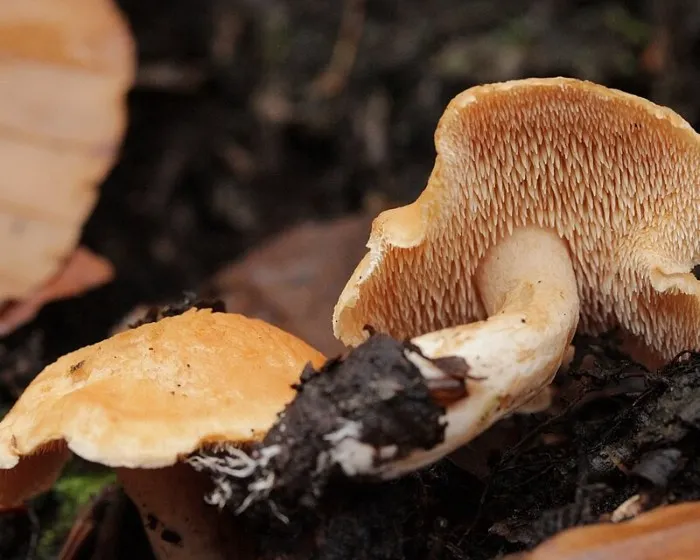
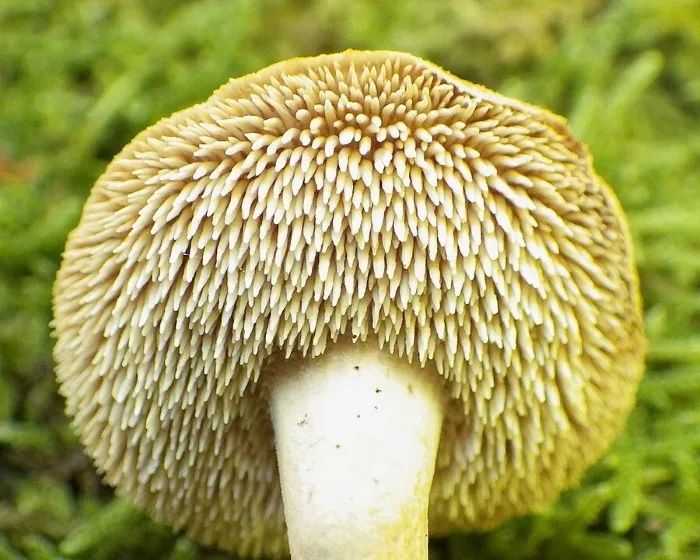
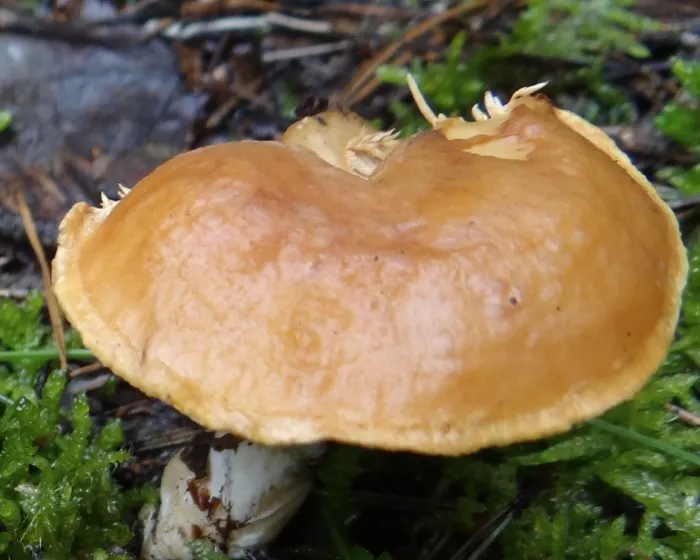
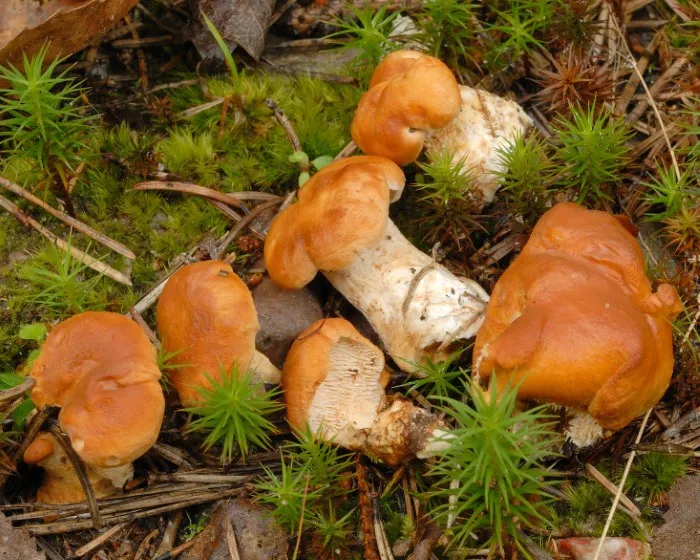
Terracotta hedgehog
Hydnum rufescens
edible
- Habitat: deciduous coniferous
- Fruiting season: June – October
- Cap: convex velvety infolded
- Stem: cylindrical lateral
- Fertile layer: spiny decurrent
Description
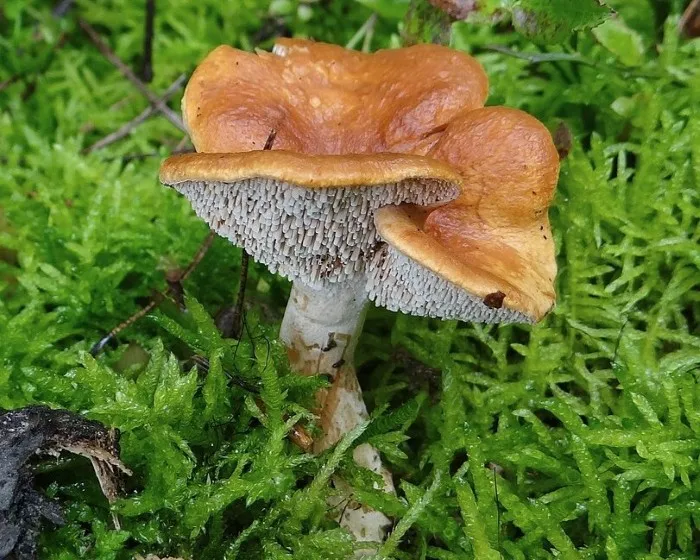
Fruitbody: Differentiated into cap-like and stem-like parts. The cap is 3–7 cm across, irregularly round, convex and sometimes half-sided; its surface is velvety. The margin remains infolded for a long time, and the colour is orange-red, rusty-red to brownish-red.
Fertile layer: The underside bears dense teeth up to 6 mm long. They are white, later cream-ochre, and slightly decurrent on the stem.
Stem: 2–5 cm long and up to 2 cm thick, irregularly cylindrical and often slightly lateral. The same colour as the cap or paler, solid.
Flesh: Soft, white to pale cream, with a pleasant smell and taste. Old fruitbodies may become slightly bitter.
Spores: Spore print whitish; spores 6.5–8.5 × 5.5–7.5 µm, roundish to broadly elliptical and smooth.
Occurrence: A common mycorrhizal species of deciduous and coniferous woodland, including mountain areas; especially associated with beech, oak, spruce and Scots pine. Fruits from June to October.
Edibility: Edible and pleasant-tasting. Young fruitbodies are preferable because old specimens may become bitter.
Lookalikes: Most easily confused with hedgehog fungus, which is larger, paler and apricot-yellow. Terracotta hedgehog is smaller and distinctly more orange to reddish.
Note: Hydnum means truffle or tuber. The Ancient Greek 'húdnon' was originally used by Theophrastus and other classical writers for underground fungi, especially truffles; Carl Linnaeus adopted it for tooth fungi. Rufescens derives from Latin 'rufescere', meaning becoming reddish, referring to the orange-rust-red cap colour. In English, members of the genus are called hedgehog mushrooms because dense teeth bearing the spores replace gills or pores.
Species description: Christiaan Hendrik Persoon described the species as Hydnum rufescens in 1800.
Taxonomy
- PhylumBasidiomycota
- ClassAgaricomycetes
- OrderCantharellales
- FamilyHydnaceae
- GenusHydnum
- Species: Hydnum rufescens
- Authority: Pers. (1800)
- English name: Terracotta hedgehog
- Ecological status: mycorrhizal
- Edibility: edible
