
 I have loved mushrooms since childhood, and I have also been a programmer for a long time. Combining these two hobbies, I wrote this website. Previously, I had two other mushroom identification sites, which I sold. Only one of them remains accessible today. My goal with the current site is to create an easy-to-use search and identification platform that works great both in the field and at home. I hope it brings joy to others.
Bartha László
Species flashcards
Practice area: created for the 303-species Hungarian mushroom inspector requirement. It is not an official examination; requirements in other countries may differ.
Poplar webcap
Cortinarius paracephalixus
not edible
Protected · 5 000 Ft
- Habitat: deciduous woodland
- Fruiting season: August – November
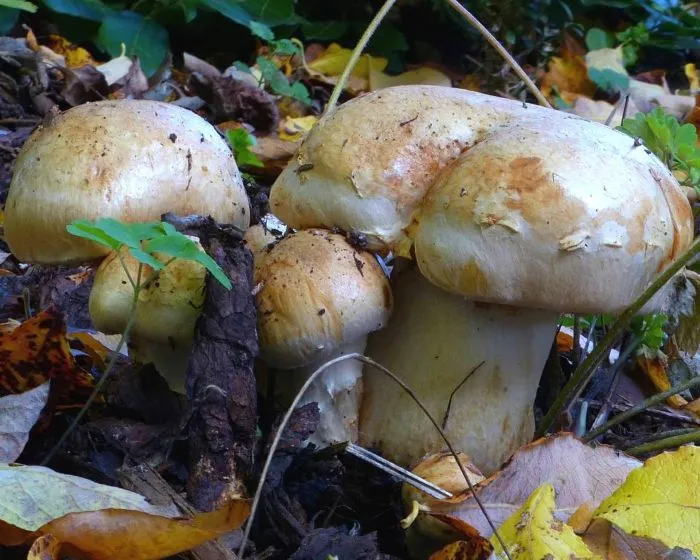
- Cap: hemispherical flattening dry sticky
- Stem: cylindrical spindle
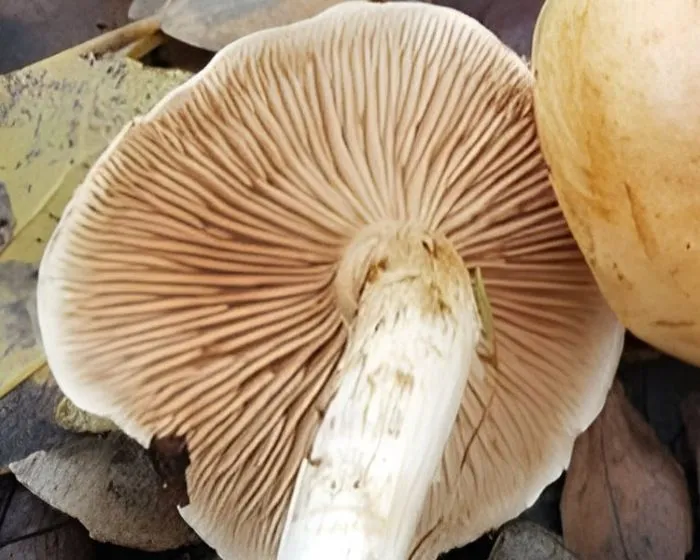
- Fertile layer: tooth decurrent
Description
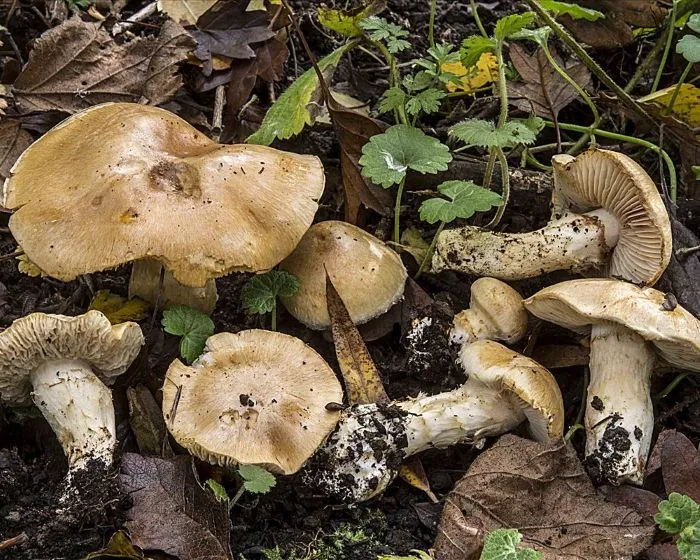
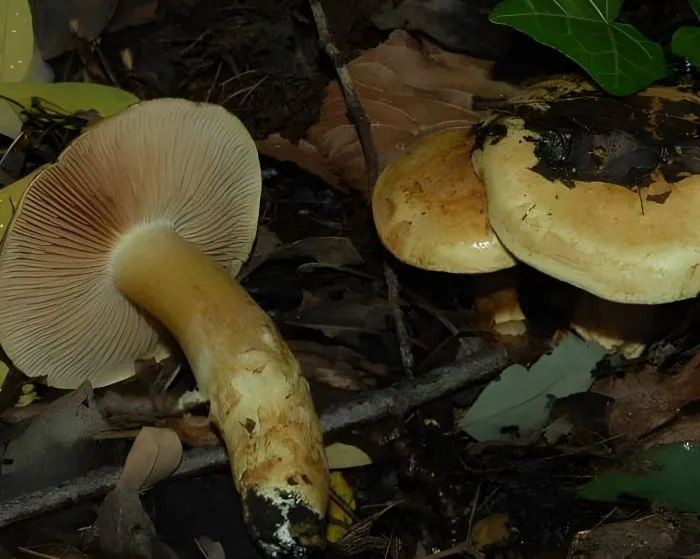
Cap: 5–12 cm across; hemispherical when young, then flattening. Initially clay-grey or pale ochre, later brownish to rusty ochre. The surface is dry but sticky when wet; young fruit bodies are covered by a whitish universal veil, remnants of which may persist on the cap margin.
Gills: Decurrent with a tooth. Pale clay-coloured when young, later ochre to rusty brown.
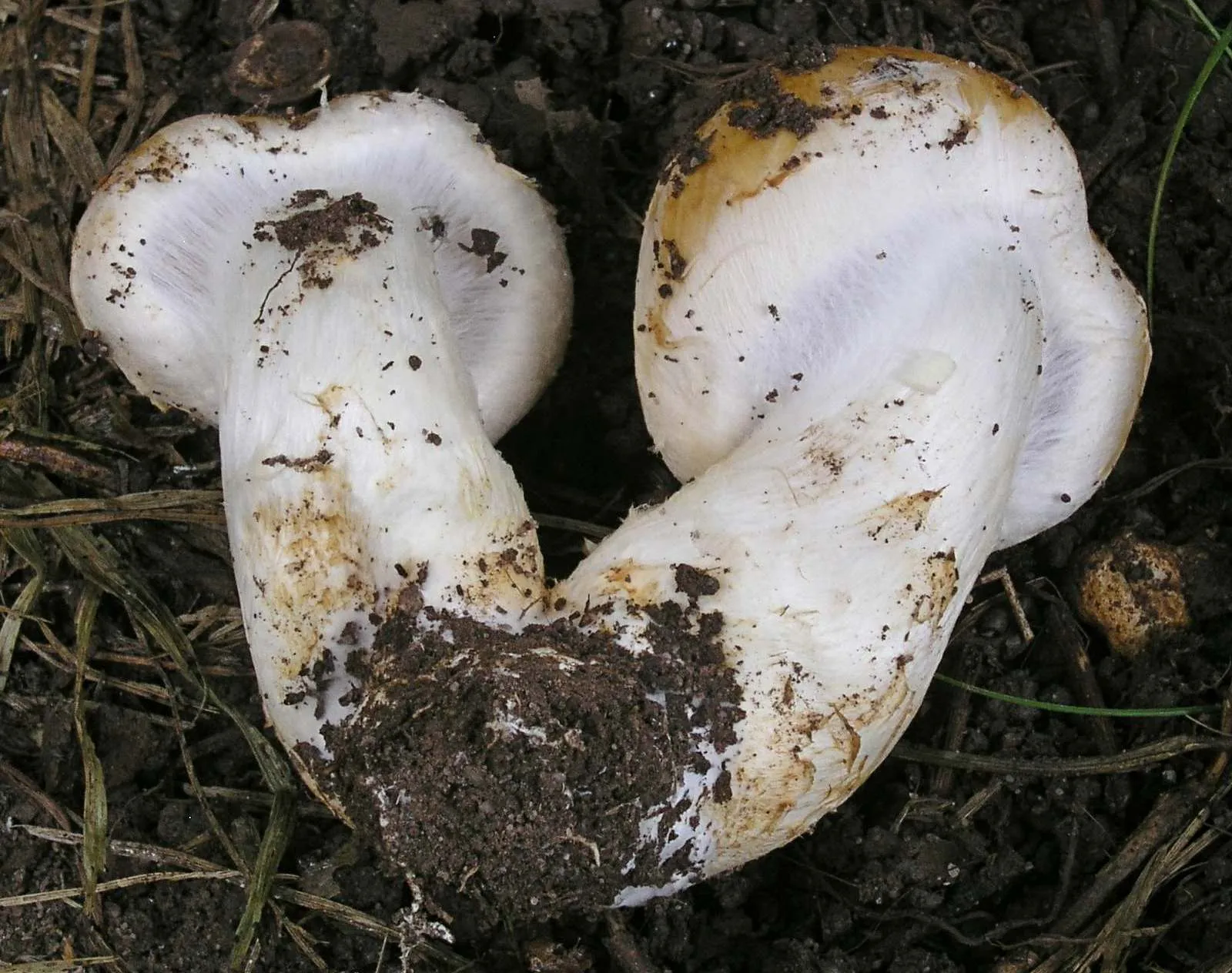
Stem: 6–15 cm tall and 1–2.5 cm thick, slender, cylindrical and sometimes spindle-shaped. Whitish at first, becoming brownish ochre; abundant whitish, then ochre-brown veil remains split into girdles with age.
Flesh: Whitish to ochre, reddening to a varying extent when cut and becoming black in the same places after several hours. The smell is notably reminiscent of corn silk, later becoming musty and unpleasant; taste mild to bitterish.
Spores: Spore print rusty brown. Spores almond-shaped, densely and coarsely warty, 11–12.5 × 6.5–7 µm.
Occurrence: A mycorrhizal species of calcareous sandy soils, chiefly with poplars, especially white poplar. It occurs in lowland alluvial woodland, poplar stands and sandy steppe woodland; rare.
Edibility: Not edible. Protected in Hungary and therefore not to be collected.
Lookalikes: It may resemble the girdled webcap and the large webcap. Its association with poplar, reddening then blackening flesh, and large coarsely warty spores are important distinguishing features.
Note: Cortinarius refers to the cortina, the cobweb-like partial veil of young fruit bodies that joins the cap margin to the stem. The prefix para- indicates resemblance, while cephal- derives from the Greek word „kephalē”, meaning head.
Species description: Scientifically described by Gábor Bohus in 1976.
Taxonomy
- PhylumBasidiomycota
- ClassAgaricomycetes
- OrderAgaricales
- FamilyCortinariaceae
- GenusCortinarius
- Species: Cortinarius paracephalixus
- Authority: Bohus (1976)
- English name: Poplar webcap
- Ecological status: mycorrhizal
- Edibility: not edible
