
 I have loved mushrooms since childhood, and I have also been a programmer for a long time. Combining these two hobbies, I wrote this website. Previously, I had two other mushroom identification sites, which I sold. Only one of them remains accessible today. My goal with the current site is to create an easy-to-use search and identification platform that works great both in the field and at home. I hope it brings joy to others.
Bartha László
Species flashcards
Practice area: created for the 303-species Hungarian mushroom inspector requirement. It is not an official examination; requirements in other countries may differ.
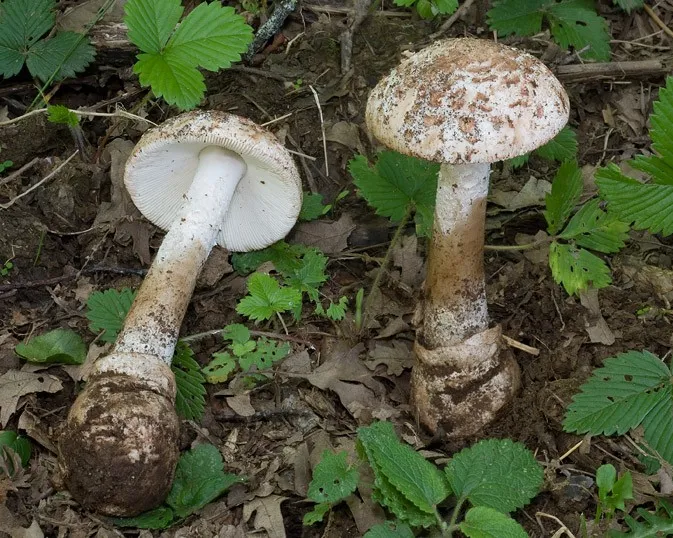
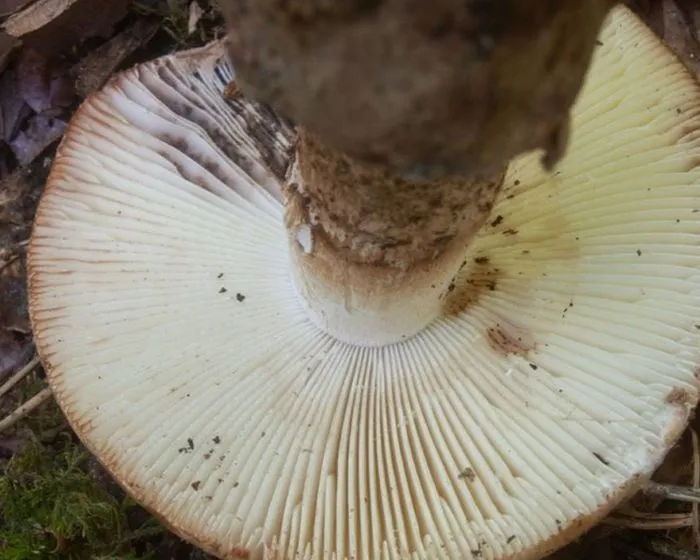
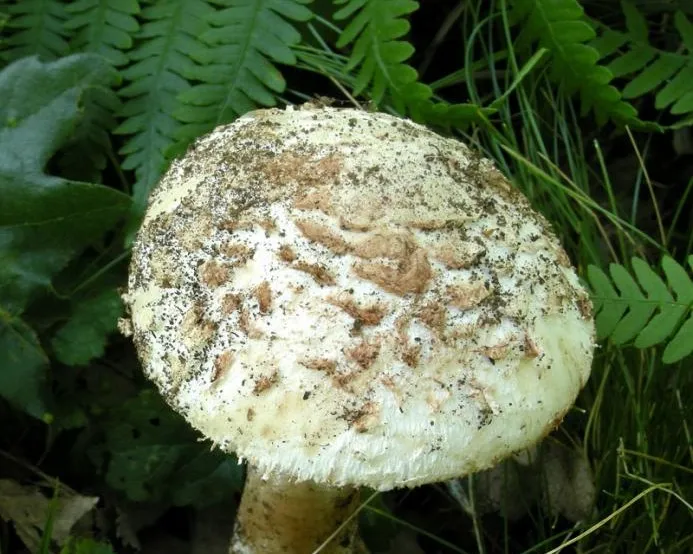
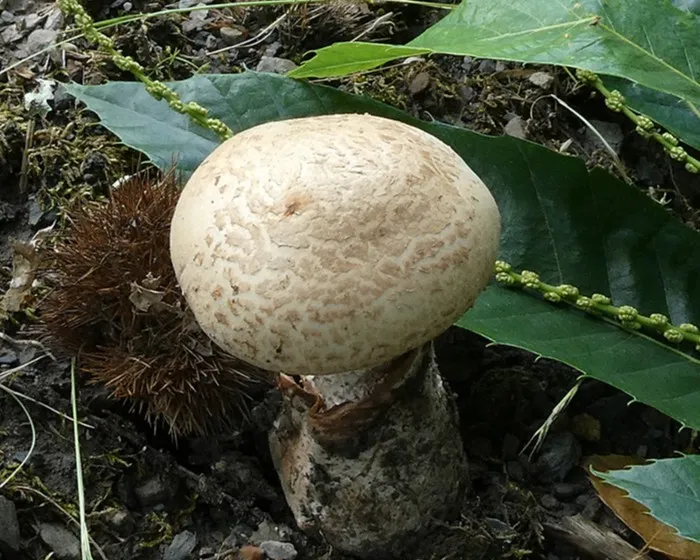
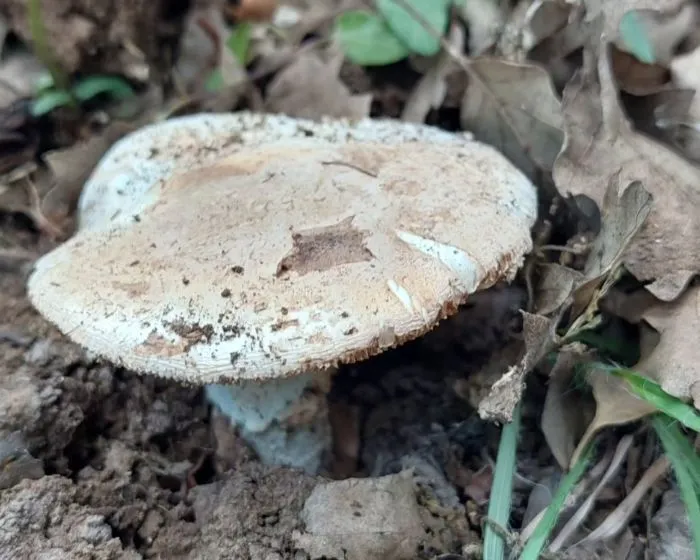
Large-scaled amidella
Amanita lepiotoides
inedible
Protected · 10 000 Ft
- Habitat: deciduous forest
- Fruiting season: July – October
- Cap: hemispherical convex flattening scaly
- Stem: cylindrical scaly
- Fertile layer: free dense standing
Description
Cap: 6–15 cm across; hemispherical when young, then convex and finally flattening. White to cream at first, later pinkish, ochre, fawn-brown to greyish-brown. The dry surface bears large, flat, brownish, triangular or trapezoid veil remnants.
Gills: Free and crowded, white to pale cream, sometimes slightly pinkish in age.
Stem: 10–20 cm tall and 1–2.5 cm thick, cylindrical and slightly widening towards the apex. Whitish to cap-coloured, finely floccose above and floccose-scaly below. The ring is white, fragile and evanescent. The base is enclosed in a large, thick, brownish membranous volva.
Flesh: White, staining salmon, reddish and finally reddish-brown with damage or age. Smell faint and taste unremarkable.
Spores: Spore print white; spores smooth, amyloid, ellipsoid to elongate ellipsoid, usually 9–13 × 6–8 µm.
Occurrence: A mycorrhizal species fruiting from summer to autumn in warm oak woodland, usually on calcareous or well-drained soil, singly or scattered. A rare species.
Edibility: Inedible. The species is protected in Hungary, where collecting it is prohibited.
Lookalikes: Similar to the scaly amanita. The large-scaled amidella is smaller, its flesh reddens then browns when damaged, it bears brownish veil remnants, and it develops a large membranous volva.
Note: Amanita may refer to the Amanus Mountains of Cilicia or a Greek expression for mountain mushrooms. Lepiota derives from the Greek lepís, scale, while the suffix -oides expresses resemblance and refers to the scaly cap pattern.
Species description: Scientifically described by Jean-Baptiste Barla in 1886.
Taxonomy
- PhylumBasidiomycota
- ClassAgaricomycetes
- OrderAgaricales
- FamilyAmanitaceae
- GenusAmanita
- Species: Amanita lepiotoides
- Synonym: Amanitopsis lepiotoides
- Authority: Jean-Baptiste Barla (1886)
- English name: Large-scaled amidella
- Ecological status: mycorrhizal
- Edibility: inedible
- Protection status: protected in Hungary
