
 I have loved mushrooms since childhood, and I have also been a programmer for a long time. Combining these two hobbies, I wrote this website. Previously, I had two other mushroom identification sites, which I sold. Only one of them remains accessible today. My goal with the current site is to create an easy-to-use search and identification platform that works great both in the field and at home. I hope it brings joy to others.
Bartha László
Species flashcards
Practice area: created for the 303-species Hungarian mushroom inspector requirement. It is not an official examination; requirements in other countries may differ.

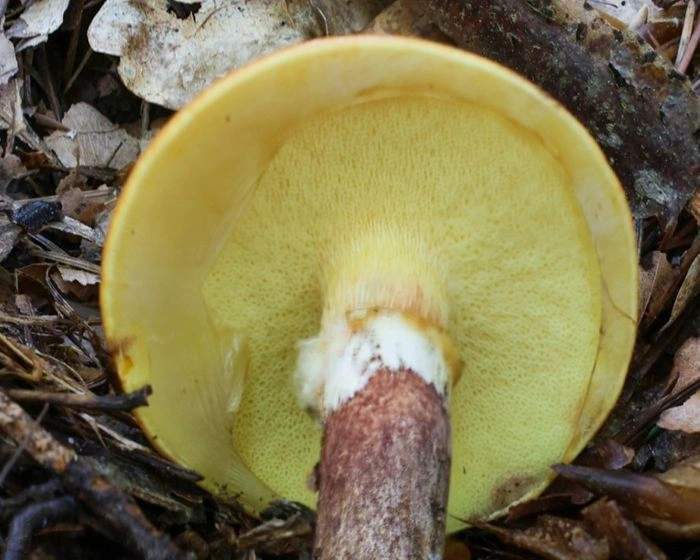
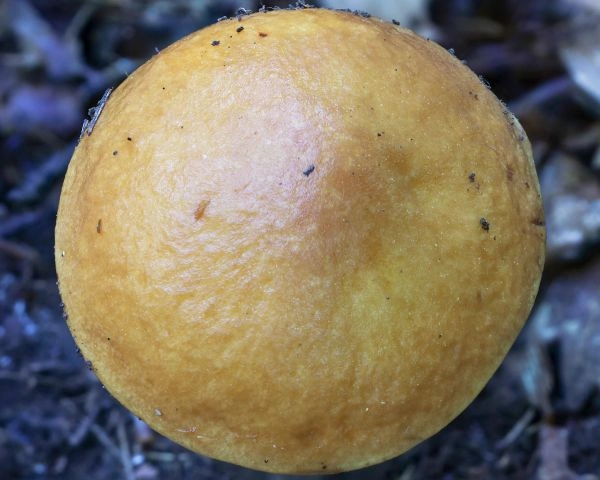
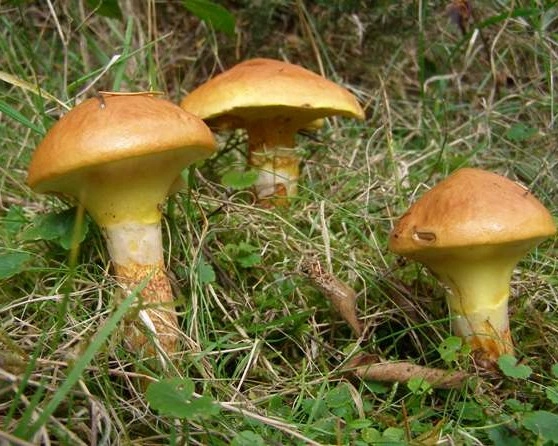
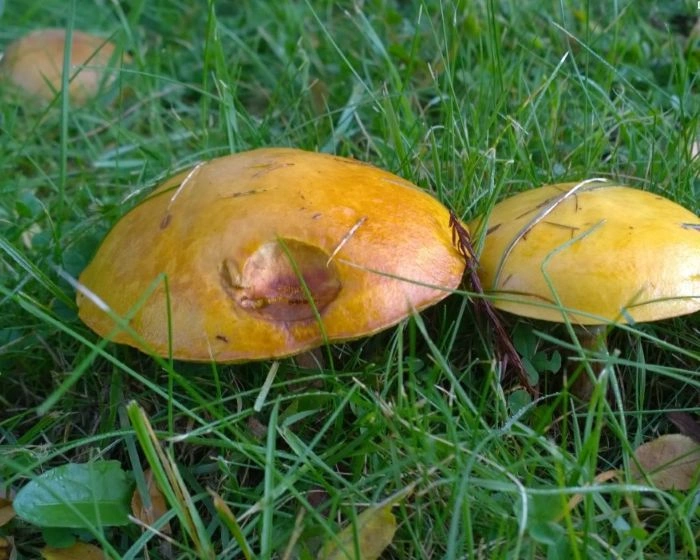
Larch bolete
Suillus grevillei
edible
- Habitat: coniferous forest
- Fruiting season: June – November
- Cap: convex flattening slimy
- Stem: cylindrical smooth
- Fertile layer: adnate dense standing
Description
Cap: 3–12 cm across; hemispherical when young, later convex and eventually almost flat. Lemon-yellow, golden-yellow, orange-yellow or orange-brown; glossy and strongly slimy when wet, with an easily removable skin.
Tubes and pores: Tubes pale yellow, later olive-yellow to brownish. Pores small and angular, lemon-yellow, staining rusty brown when bruised.
Stem: 5–10 cm tall and 1–3 cm thick, cylindrical and slightly broader towards the base. Yellow and often finely reticulate above the ring, brownish to reddish-brown and fibrous-scaly below. A well-developed yellowish-white, slimy ring is present.
Flesh: Pale to lemon-yellow, soft and usually unchanging when cut, occasionally browning slightly. Odour and taste mild.
Spores: Spore print ochre to yellowish-brown; spores 8–10 × 2.5–3.5 µm, smooth and ellipsoid.
Occurrence: A mycorrhizal species exclusively associated with larch under natural conditions. It fruits from June to November in larch stands, mixed woodland, along woodland edges and paths, often in groups.
Edibility: Edible. The slimy cap skin is best removed before cooking; young fruit bodies are of the best quality.
Lookalikes: May resemble the slippery jack, which grows with Scots pine instead. Its strict association with larch, golden-yellow cap and slimy ring distinguish the larch bolete.
Note: Earlier names for the species include Suillus elegans.
Species description: First described by Johann Friedrich Klotzsch in 1832; Rolf Singer transferred it to Suillus in 1945.
Taxonomy
- PhylumBasidiomycota
- ClassAgaricomycetes
- OrderBoletales
- FamilySuillaceae
- GenusSuillus
- Species: Suillus grevillei
- Original author: Johann Friedrich Klotzsch (1832)
- Current combination: (Klotzsch) Singer (1945)
- English name: Larch bolete
- Ecological status: mycorrhizal
- Edibility: edible
