
 I have loved mushrooms since childhood, and I have also been a programmer for a long time. Combining these two hobbies, I wrote this website. Previously, I had two other mushroom identification sites, which I sold. Only one of them remains accessible today. My goal with the current site is to create an easy-to-use search and identification platform that works great both in the field and at home. I hope it brings joy to others.
Bartha László
Species flashcards
Practice area: created for the 303-species Hungarian mushroom inspector requirement. It is not an official examination; requirements in other countries may differ.

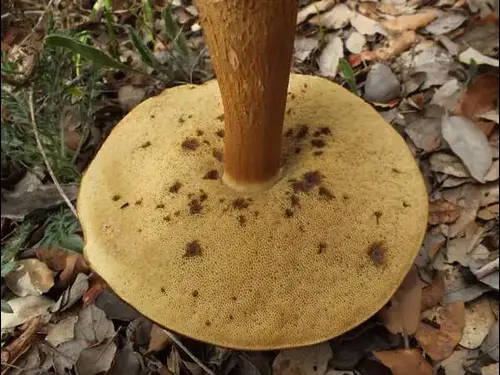
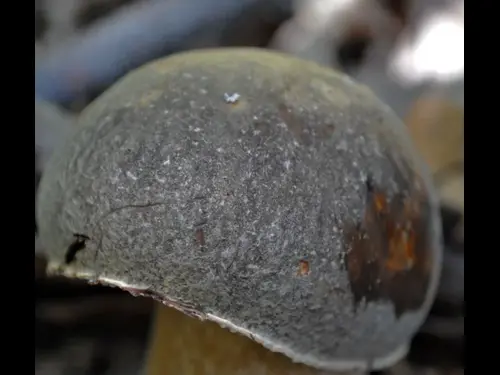
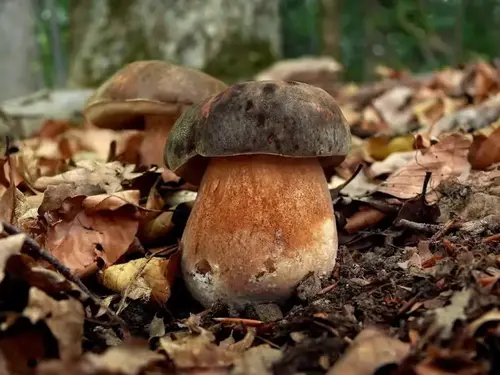
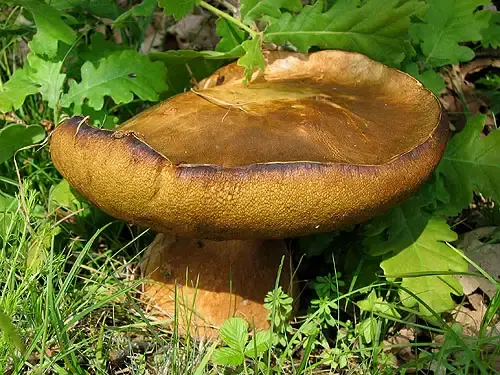
Bronze bolete
Boletus aereus
edible
- Habitat: deciduous
- Fruiting season: May – October
- Cap: convex flattening smooth
- Stem: cylindrical thick smooth
- Fertile layer: adnate
Description
Cap: 5-20 cm across, hemispherical to convex, flattening with age, dark brown with bronze hues, velvety.
Pores: Tubular pore surface, small pores, whitish at first, turning yellow then olive-green.
Stem: 5-15 cm tall, 2-5 cm thick, solid, cylindrical or club-shaped, finely reticulated.
Flesh: Firm, white, non-staining, pleasant aroma and mild taste.
Spores: Spore print olive-brown; 12-16 x 4-5.5 μm; fusiform.
Occurrence: Thermophilic species found in broadleaf forests (especially with oak, beech, and sweet chestnut) from summer to autumn.
Edibility: Choice edible mushroom.
Lookalikes: May be confused with other boletes such as Boletus edulis or Boletus reticulatus.
Note: Etymology: Genus name Boletus comes from Ancient Greek bôlos (clod, lump); aereus means bronze-colored.
Species description: Formally described by Pierre Bulliard (1782) / Elias Magnus Fries (1821).
Taxonomy
- PhylumBasidiomycota
- ClassAgaricomycetes
- OrderBoletales
- FamilyBoletaceae
- GenusBoletus
- Species: boletus aereus
- Authority: Pierre Bulliard
- English Name: Bronze bolete
- Ecological status: mycorrhizal
- Edibility: edible
