
 I have loved mushrooms since childhood, and I have also been a programmer for a long time. Combining these two hobbies, I wrote this website. Previously, I had two other mushroom identification sites, which I sold. Only one of them remains accessible today. My goal with the current site is to create an easy-to-use search and identification platform that works great both in the field and at home. I hope it brings joy to others.
Bartha László
Species flashcards
Practice area: created for the 303-species Hungarian mushroom inspector requirement. It is not an official examination; requirements in other countries may differ.

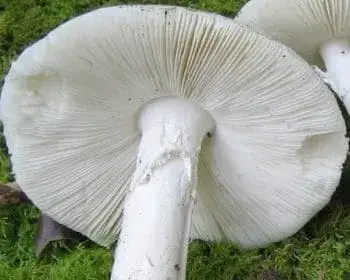

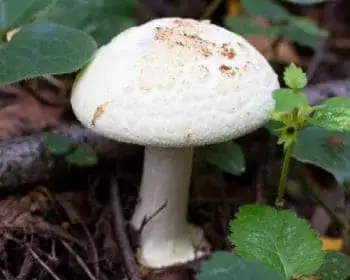
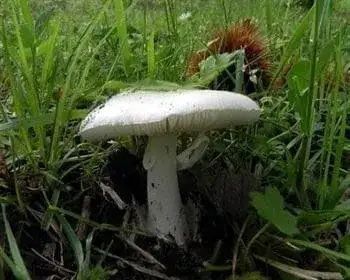
Spring Amanita
Amanita verna
poisonous
- Habitat: deciduous
- Fruiting season: May – October
- Cap: hemispherical flat smooth
- Stem: cylindrical bulbous
- Fertile layer: free dense
Description
Cap: Hemispherical when young, then convex, finally spreading to 5-8 cm in diameter. The white cap surface is smooth, becoming slightly sticky when wet, shiny when dry.
Gills: Also white, dense, free-standing.
Stem: The 8-15 cm long, 0.5-2 cm thick, white, bulbous stem has a hanging ring and a large volva, often deep in the soil.
Flesh: White, quite soft, and has no characteristic smell and taste.
Spore: White; 8‑10 × 6.5‑8 μm; elliptical or spherical.
Occurrence: In Hungary, it has been found so far in hornbeam-oak forests and sandy oak forests, in summer and early autumn, a rather rare species in Hungary.
Edibility: Deadly poisonous, just like the Death Cap.
Confusion: This is the most dangerous poisonous mushroom species, because it can be very easily confused with white edible mushrooms. The careless mushroom collector may confuse it with white-fruiting mushrooms, but their gills quickly become grayish-pinkish, pinkish, and finally chocolate-brown, and the cylindrical stem has no volva. Dapperlings resemble the white amanita even more, as their fruiting body is white, including their gills. The dapperling's club-shaped stem, however, has no volva, and it generally grows outside forests. It can also be easily confused with the pointed amanita.
Note: The amanita genus currently includes 35 species. The fruiting body has both a general and a partial veil, except for grisettes, which have no ring. verna is a Latin word meaning - spring. Its toxin is the same as that of the Death Cap.
Species description: Jean Baptiste François Pierre Bulliard first described it scientifically. Later, Pers placed it in the amanita genus.
Taxonomy
- PhylumBasidiomycota
- ClassAgaricomycetes
- OrderAgaricales
- FamilyAmanitaceae
- GenusAmanita
- Species: verna
- Described by: (Bull. ex Fr.) Lam.
- Hungarian name: fehér galóca
- Lifestyle: mycorrhizal
- Edibility: poisonous
