
 I have loved mushrooms since childhood, and I have also been a programmer for a long time. Combining these two hobbies, I wrote this website. Previously, I had two other mushroom identification sites, which I sold. Only one of them remains accessible today. My goal with the current site is to create an easy-to-use search and identification platform that works great both in the field and at home. I hope it brings joy to others.
Bartha László
Species flashcards
Practice area: created for the 303-species Hungarian mushroom inspector requirement. It is not an official examination; requirements in other countries may differ.

Möller's Mushroom
Agaricus moelleri
poisonous
- Habitat: deciduous
- Fruiting season: June – November
- Cap: flat scaly smooth
- Stem: cylindrical bulbous
- Fertile layer: free dense smooth
Description
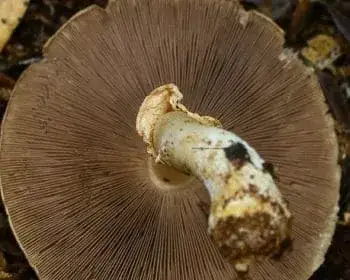
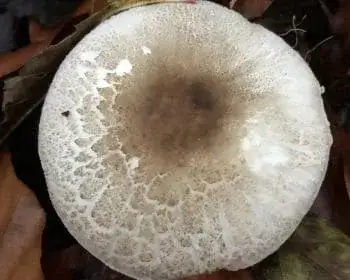
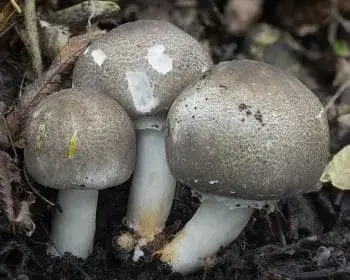
Cap: Whitish base color, but covered with tiny dark gray or grayish-brown scales. Much denser towards the center, thinning outwards. The cap margin is infolded for a long time and may have small veil remnants. The cap turns bright lemon yellow on pressure or injury.
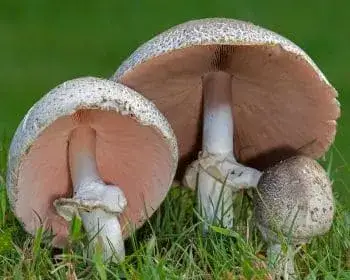
Gills: When young, its gills are pinkish, like most mushrooms. Later they become brown, and finally turn chocolate brown. Densely and freely standing.
Stem: Its stem is white, cylindrical, slightly bulbous at the base. Its ring is widely spreading, also discoloring on touch, taking on a bright chrome yellow color.
Flesh: White, solid, discoloring on breakage. This process is faster in the stem base. The discoloration is a good identifying feature. Its smell is unpleasant carbolic or ink-like. In older age, the smell intensifies.
Spore: Dark brown; 5-6 x 3.5-4 µm; elliptical, smooth.
Occurrence: Weedy, forest edges, lighter acacia groves. Occurs on manured soil in gardens and orchards. Not a rare species. From June to November, until frost. Often several mushrooms grow in one place.
Edibility: Poisonous. Causes stomach and intestinal problems.
Confusion: Can be confused with the edible wood mushroom and the young specimens of the parasol mushroom.
Note: This also belongs to the yellowing mushrooms, which turn yellow. It is advisable to avoid these nearly 10 yellowing mushroom species. The moelleri name was given in honor of the German mycologist and forest botanist Alfred Möller (1860-1921).
Species description: In a 1976 publication, the Ukrainian mycologist Dr. Solomon P. Wasser (b. 1946) referred to it as a separate species, until then it belonged to the yellow stainer.
Taxonomy
- PhylumBasidiomycota
- ClassAgaricomycetes
- OrderAgaricales
- FamilyAgaricaceae
- GenusAgaricus
- Species: moelleri
- Described by: Wasser
- Hungarian name: tintaszagú csiperke
- Lifestyle: soil saprotroph
- Edibility: poisonous
