
 I have loved mushrooms since childhood, and I have also been a programmer for a long time. Combining these two hobbies, I wrote this website. Previously, I had two other mushroom identification sites, which I sold. Only one of them remains accessible today. My goal with the current site is to create an easy-to-use search and identification platform that works great both in the field and at home. I hope it brings joy to others.
Bartha László
Species flashcards
Practice area: created for the 303-species Hungarian mushroom inspector requirement. It is not an official examination; requirements in other countries may differ.

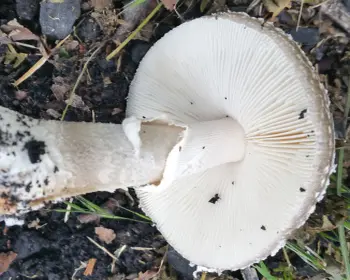
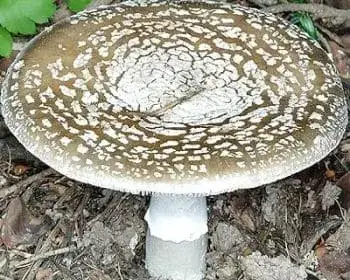
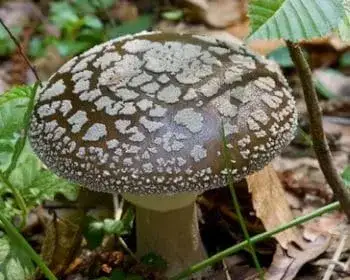
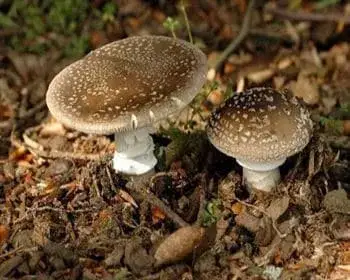
Grey Spotted Amanita
Amanita excelsa
conditionally edible
- Habitat: deciduous coniferous
- Fruiting season: June – November
- Cap: hemispherical flat spotted grooved
- Stem: cylindrical thickening
- Fertile layer: curved free dense fringed
Description
Cap: Can reach 15 cm in diameter for this stocky, robust mushroom. Its surface is covered with many white or grayish, strongly adhering, flour-like spots on a grayish-brown base. In young state, the cap is rough and floury, egg-shaped, then spreading during development.
Gills: Under the cap, the white gills are densely packed, and their color does not change later. They are not attached to the whitish, graying downwards stem, free.
Stem: Can grow to 10-12 cm tall, its base is bulbously thickened. A wreath of small warts can be observed on the bulb. The ring sits high and does not disintegrate as quickly as in some other amanitas. Finely grooved.
Flesh: White, in some varieties slightly browning, its taste is generally mild, although its smell and taste are sometimes unpleasantly musty and earthy.
Spore: White; 9-10 x 8-9μm; elliptical.
Occurrence: In Hungary, under deciduous trees from June to October, a species rarer than the panther cap.
Edibility: The grey spotted amanita is edible, but poisonous raw. Even when cooked, it often has an earthy taste. Not recommended for consumption due to confusion risks.
Confusion: Can be confused with the young blusher, whose cap and stem are pinkish-flesh-colored, and its flesh reddens; also with the panther cap, which has mostly regular, white veil remnants, and its stem base is rimmed bulbous. The grooving of the cap margin is not a reliable identifying feature.
Note: Some mycologists distinguish two more varieties: var. excelsa, var valida. spissa means thick and dense. The latter refers to its gills.
Species description: In 1821, the Swedish Elias Magnus Fries mycologist named it Agaricus Excelsus. In 1871, it was placed in the Amanita genus by Paul Kummer, and received the name Amanita excelsa.
Taxonomy
- PhylumBasidiomycota
- ClassAgaricomycetes
- OrderAgaricales
- FamilyAmanitaceae
- GenusAmanita
- Species: excelsa
- Described by: (Fr.) Bertill. (1866)
- Hungarian name: szürke galóca
- Lifestyle: mycorrhizal
- Edibility: edible
